
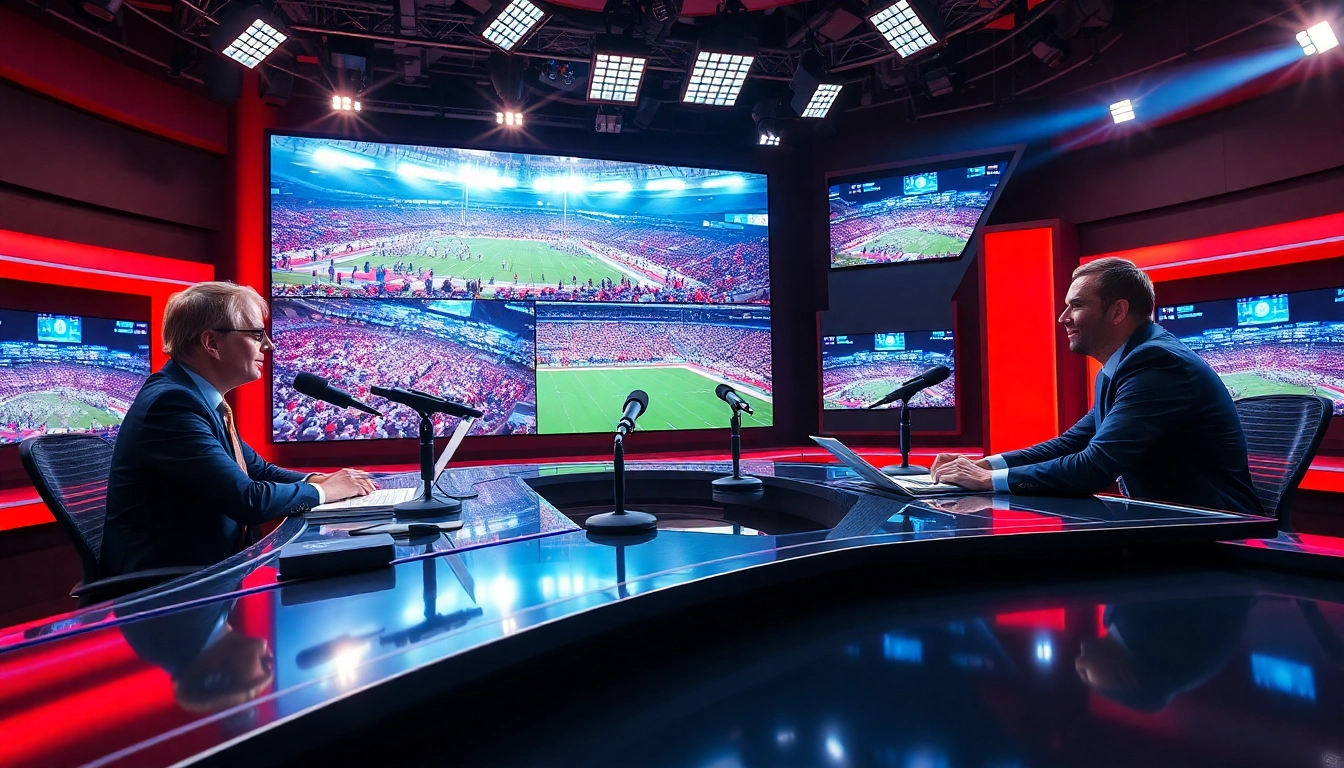
Understanding Sports Broadcasting
Definition of Sports Broadcasting
Sports broadcasting involves the transmission of live or recorded sports events via television, radio, or the internet. It encompasses various formats, including play-by-play commentary, analyses, interviews, and highlight reels, allowing fans to immerse themselves in their favorite sports from the comfort of their homes or on-the-go. The essence of Sports Broadcasting lies in its ability to connect fans with sports, providing a platform for community engagement and excitement.
Importance of Sports Broadcasting
The importance of sports broadcasting cannot be understated. It serves as a bridge between the sport and its audience, shaping not only viewership habits but also cultural perceptions around sports. By delivering live and engaging content, broadcasters help teams and leagues reach wider audiences, driving revenue through advertising, sponsorships, and partnerships. Furthermore, it enhances the fan experience, offering insights and narratives that go beyond mere gameplay.
Evolution of Sports Broadcasting
The evolution of sports broadcasting has been remarkable, transitioning from radio broadcasts in the early 20th century to today's multi-platform ecosystems. Each development has introduced new methods of engagement, such as the introduction of color television, satellite broadcasting, and streaming services, which have reshaped how sports are consumed. Presently, we are witnessing the rise of augmented reality and virtual reality technologies, promising an even more immersive experience for viewers across the globe.
Key Components of Sports Broadcasting
Types of Sports Broadcasts
Sports broadcasts can be categorized into several types, including live game coverage, pre-game and post-game shows, sports news segments, and special event programming. Live game coverage focuses on real-time play, while pre-game shows build anticipation and provide team insights. Post-game analysis reviews performance highlights and critical moments, and sports news segments keep fans updated on player transfers, injuries, and other developments.
Equipment Used in Sports Broadcasting
The equipment used in sports broadcasting is pivotal for delivering high-quality content. Essential tools include cameras for capturing live footage, audio equipment for clear commentary, and graphics systems for displaying real-time statistics and scores. Additionally, satellite trucks and fiber-optic connections enable seamless transmission, while editing software is essential for producing highlights and packaged segments after the event.
Roles in Sports Broadcasting
A successful sports broadcast team involves various roles, each contributing to the overall production. Key positions include play-by-play announcers who provide real-time commentary, color commentators who analyze and offer insights, producers who orchestrate the broadcast flow, and directors who ensure camera shots capture the action effectively. Behind the scenes, technical staff operate equipment and manage transmissions, creating a seamless viewing experience for fans.
Challenges in Sports Broadcasting
Technical Challenges Faced
Technical challenges in sports broadcasting are numerous, from signal interference and equipment failure to ensuring smooth live streaming experiences. High-profile events require robust infrastructure to handle large audiences while minimizing delays. As technology advances, broadcasters must also adapt to the complexities of delivering high-definition (HD) and ultra-high-definition (UHD) content, which demands increased bandwidth and seamless integration across platforms.
Legal and Ethical Considerations
Legal and ethical considerations are crucial in sports broadcasting. Broadcasting rights must be secured to avoid infringing on intellectual property. Additionally, ethical journalism practices dictate the responsible reporting of events and athlete conduct. There is a growing emphasis on transparency and avoiding conflicts of interest, especially related to sponsorship and advertising partnerships that can influence content.
Viewership Trends and Engagement
Viewership trends in sports broadcasting are constantly evolving. The shift toward on-demand content enables fans to engage with sports on their terms, leading to the rise of streaming services over traditional cable subscriptions. Engagement strategies, such as interactive content and social media platforms, are increasingly used to foster a sense of community among fans and enhance their viewing experiences by allowing real-time feedback and discussions.
Best Practices in Sports Broadcasting
Audience Interaction Techniques
Engaging audiences is essential for modern sports broadcasting. Techniques such as live polls during broadcasts, integration of social media discussions, and Q&A sessions with commentators can significantly enhance audience interaction. Using gamification elements, like prediction games or fantasy leagues, can also boost engagement and make fans feel more invested in the content being presented.
Content Creation Strategies
Content creation strategies in sports broadcasting must focus on authenticity and resonance with viewers. This includes behind-the-scenes content, athlete interviews, and community-oriented features that highlight fan experiences. Emphasizing storytelling helps connect emotionally with audiences, making them more likely to return for future broadcasts. Leveraging catchphrases or signature segments can create memorable moments that enhance the brand identity of the broadcaster.
Utilizing Technology for Enhanced Experience
Incorporating technology is paramount in enhancing the sports broadcasting experience. Utilizing augmented reality (AR) and virtual reality (VR) creates immersive viewing environments, while analytics technologies can provide predictive insights and statistics in real-time. Broadcasters should also invest in mobile applications that deliver personalized content, fostering fan loyalty and interaction beyond the traditional broadcast setting.
The Future of Sports Broadcasting
Emerging Technologies Impacting Sports Broadcasting
The future of sports broadcasting is poised for remarkable innovation driven by emerging technologies. Artificial intelligence and machine learning will play pivotal roles in improving viewer personalization, automated highlights generation, and enhancing commentary through real-time data analysis. The integration of 5G networks promises faster, more reliable streaming, enabling even higher quality broadcasts that can cater to a global audience.
The Role of Social Media in Sports Broadcasting
Social media's influence on sports broadcasting cannot be overlooked. Platforms like Twitter and Instagram enable broadcasters to reach younger demographics, providing real-time highlights and updates that complement traditional viewing. User-generated content fosters a more interactive environment, allowing fans to share their experiences and thoughts, enhancing their sense of community around the sport.
Predictions for the Next Decade
As we look to the next decade, predictions suggest that sports broadcasting will increasingly converge with other forms of entertainment. We may see partnerships with gaming companies to create immersive experiences or events that blend traditional sports with esports elements. Furthermore, environmental sustainability will become a priority, influencing how broadcasts are produced and delivered, ensuring that sports entertainment evolves positively on multiple fronts.
FAQs about Sports Broadcasting
What does sports broadcasting include?
Sports broadcasting includes live game coverage, commentary, pre-game and post-game shows, interviews, and highlights, providing comprehensive coverage of sports events.
How has technology changed sports broadcasting?
Technology has transformed sports broadcasting through high-definition and live streaming, interactive experiences, VR and AR, enhancing viewer engagement and accessibility.
What are the major challenges in sports broadcasting?
Major challenges include technical issues like bandwidth limitations, securing broadcasting rights, legal and ethical considerations, and adapting to changing viewer habits.
Why is audience interaction important in sports broadcasting?
Audience interaction enriches viewer experience, fosters community, and strengthens engagement, making fans feel more connected and involved with the content and teams.
What will the future of sports broadcasting look like?
The future will feature innovations through AI, 5G connectivity, and a blend of sports with entertainment, enhancing viewer experiences and building stronger fan communities.